
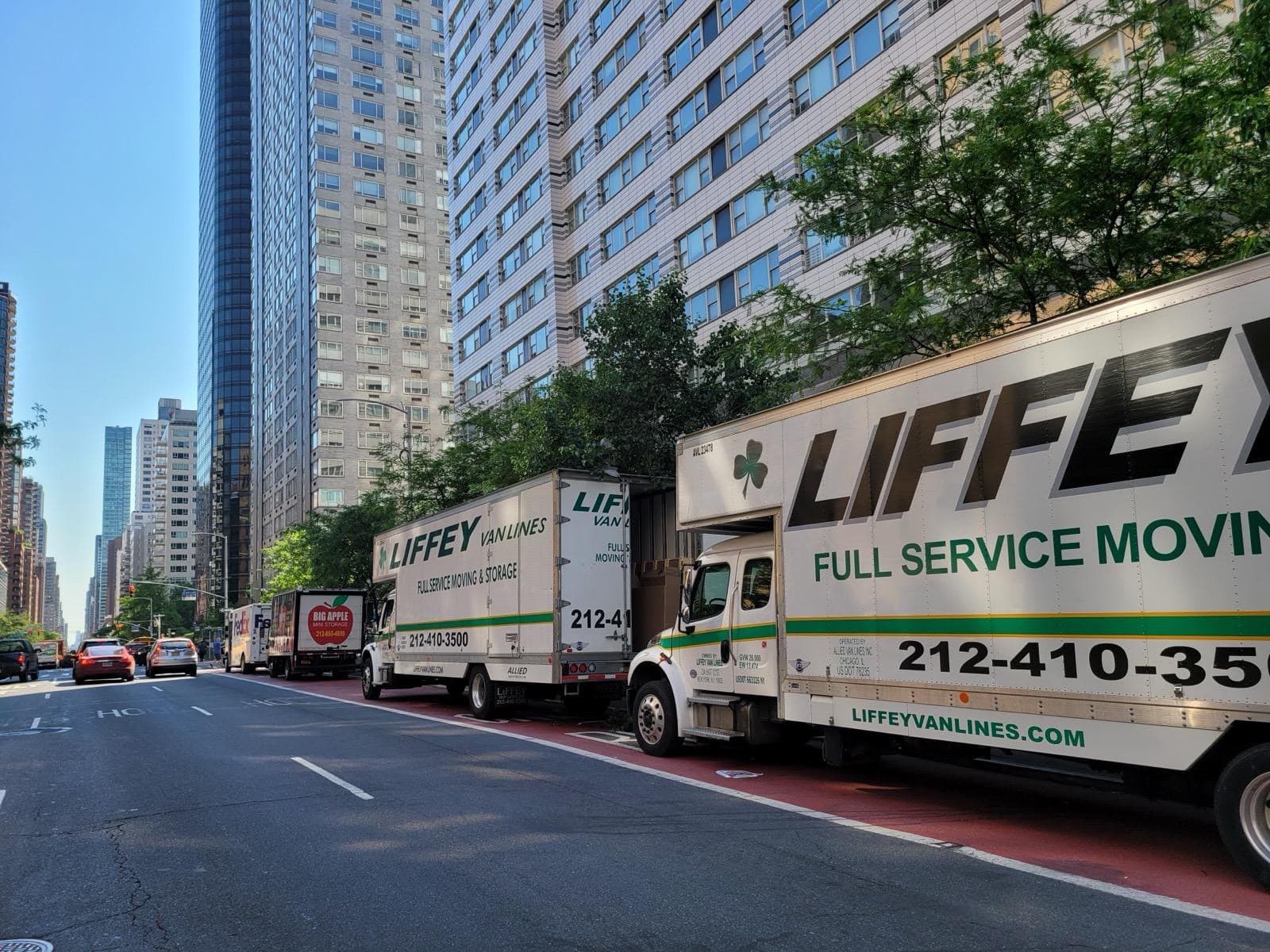
According to the NYC Department of Buildings as cited in the original article, property managers set their own elevator access policies. Typical requirements include a COI, a scheduled time slot usually between 9 AM–5 PM with no weekend access, service entrance and freight elevator use, and wall, floor, and elevator padding. Neighborhoods like the Upper West Side or Downtown Brooklyn may require 10–14 days’ notice. See NYC moving permits 2025.
Timing, parking, and COI
Book your mover 3–4 weeks ahead in peak season (May–September). Contact building management immediately. Align move duration with the elevator window and allow a 30–60 minute buffer. Brooklyn brownstones and pre-war buildings often lack elevators; crews use lifting straps and stair pads. The original article said moving trucks must follow posted signage and that temporary DOT parking permits can be obtained — apply at least 5 business days before. Typical COI coverages listed: $1M general liability, worker’s compensation, and property damage coverage.
Seasonal demand and published fee examples
May through September, elevator slots in luxury condos can book out 3–4 weeks ahead. Midweek (Tuesday–Thursday) often has better availability. The original article said elevator reservation fees are not common, but some luxury buildings charge $100–$400 for after-hours staffing or extra protection. Its example coordination table: Manhattan high-rise $2,000–$3,000 with freight elevator; Brooklyn brownstone $1,500–$2,000 stair climb; Queens mid-rise $1,200–$1,800 shared service. Treat those as the 2025 article’s examples. Hourly rate movers were mentioned for flexible scheduling. Get a quote.