
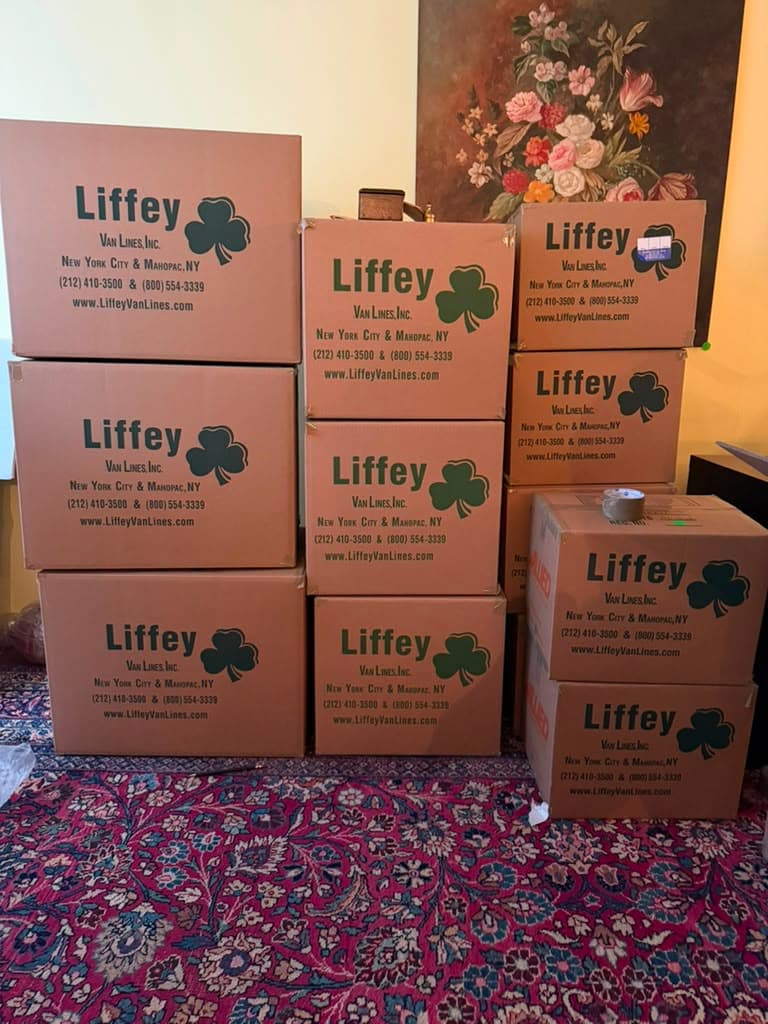
Choose one place to stage packed boxes
Pick a stretch of wall or a cleared corner where packed cartons can sit without blocking the front door, kitchen, bathroom, or radiator. In a studio, a small area beside the sofa may be enough. Avoid spreading stacks around the apartment: one deliberate packing zone is easier to manage than five piles.
Keep tape, labels, a marker, packing paper, and a trash bag in the same area. When the zone fills, reassess instead of building a tall, unstable stack. Boxes must never block exits or shared corridors, even temporarily.
Sort by use before you start sealing boxes
Make four decisions as you touch each item: pack it, keep it accessible, donate or sell it, or discard it responsibly. Small NYC apartments hide unused belongings under beds, on high shelves, and behind closet doors. There is little sense moving something you already know you do not want.
Finish one shelf or drawer before opening another. Set a deadline for donations so bags do not become a second obstacle. For a broader overview of sequencing, see what to pack first for a move.
Pack each room in two passes
In the first pass, pack things you will not need before moving: off-season clothes, decorative objects, books already read, spare linens, and occasionally used cookware. Close each box completely and move it straight to the staging zone. Avoid emptying every cupboard at the same time.
In the second pass, closer to moving day, pack most remaining belongings but keep a tiny everyday set: a few outfits, essential toiletries, one set of dishes per person, and chargers. A two-pass approach means you can still live in the apartment while making steady progress.
Keep a small kitchen working
Counter space is precious in many NYC kitchens. Empty one cabinet at a time, starting with specialty appliances and serving dishes. Wrap glasses and plates individually, cushion gaps, and avoid placing fragile items loose in a half-filled carton. Clean and dry items before sealing them.
Leave a clear spot for preparing simple meals. Use up perishables as the move approaches, and ask the mover before boxing cleaning chemicals, aerosols, or anything flammable. The goal is to avoid unpacking a sealed carton just to make dinner.
Protect your walking routes as boxes accumulate
After each packing session, walk from the front door to the kitchen, bathroom, and bedroom. Can every door open fully? Can you carry something without squeezing sideways past a stack? Keep exits and building hallways clear; they are not temporary storage areas.
Place heavier boxes low and do not lean stacks against delicate furniture. If the apartment is a walk-up, think about how boxes will pass around the stairwell's narrow turns. See our NYC walk-up moving checklist for the building-access details.
Match carton size to weight
A large box filled with books might look efficient until it has to go down four flights of stairs. Use smaller, sturdy boxes for books and other dense items; reserve larger cartons for lighter things such as pillows, towels, and bedding. Pack weight evenly and tape the bottom securely.
Do not fill every inch simply because there is space. A box should close without bulging and be manageable to lift. Fragile belongings may need extra cushioning or a purpose-made carton. Liffey's moving box guide explains the common carton types.
Label for the apartment you are moving into
A label saying 'closet' may describe your old studio but not help in a differently arranged new home. Write the destination room, a short description of the contents, and 'fragile' or 'open first' when relevant. Put labels on the sides as well as the top so they are still readable when boxes are stacked.
Numbering cartons can also give you a simple inventory. If the new apartment is smaller, decide where each group should land before moving day. Clear labels reduce the need to open every carton while looking for one basic item.
Make a first-night kit that never enters the truck
Keep identification, paperwork, medication, keys, wallet, jewelry, laptop, phone, and chargers with you. Add toiletries, clothes, any urgently needed bedding, and a few basics for breakfast. Pack immediate supplies for children or pets where applicable.
Place the bag somewhere separate and mark it 'travels with me.' Keep your building manager's contact details and any access fobs nearby too. You should not have to reopen sealed boxes to find the most important things after a long day.
Finish with a practical NYC moving-day check
Confirm the approved moving hours, loading instructions, elevator reservation, and any Certificate of Insurance requirements at both buildings. Give the mover the stair count, narrow doorway information, and a list of oversized or fragile pieces. Accurate details help the crew plan the job.
By arrival time, cartons should be sealed and routes clear unless you booked professional packing. For help arranging a studio or one-bedroom move, visit Liffey's local NYC moving services or request an estimate. The most effective packing plan is one that keeps your home usable until you leave.